
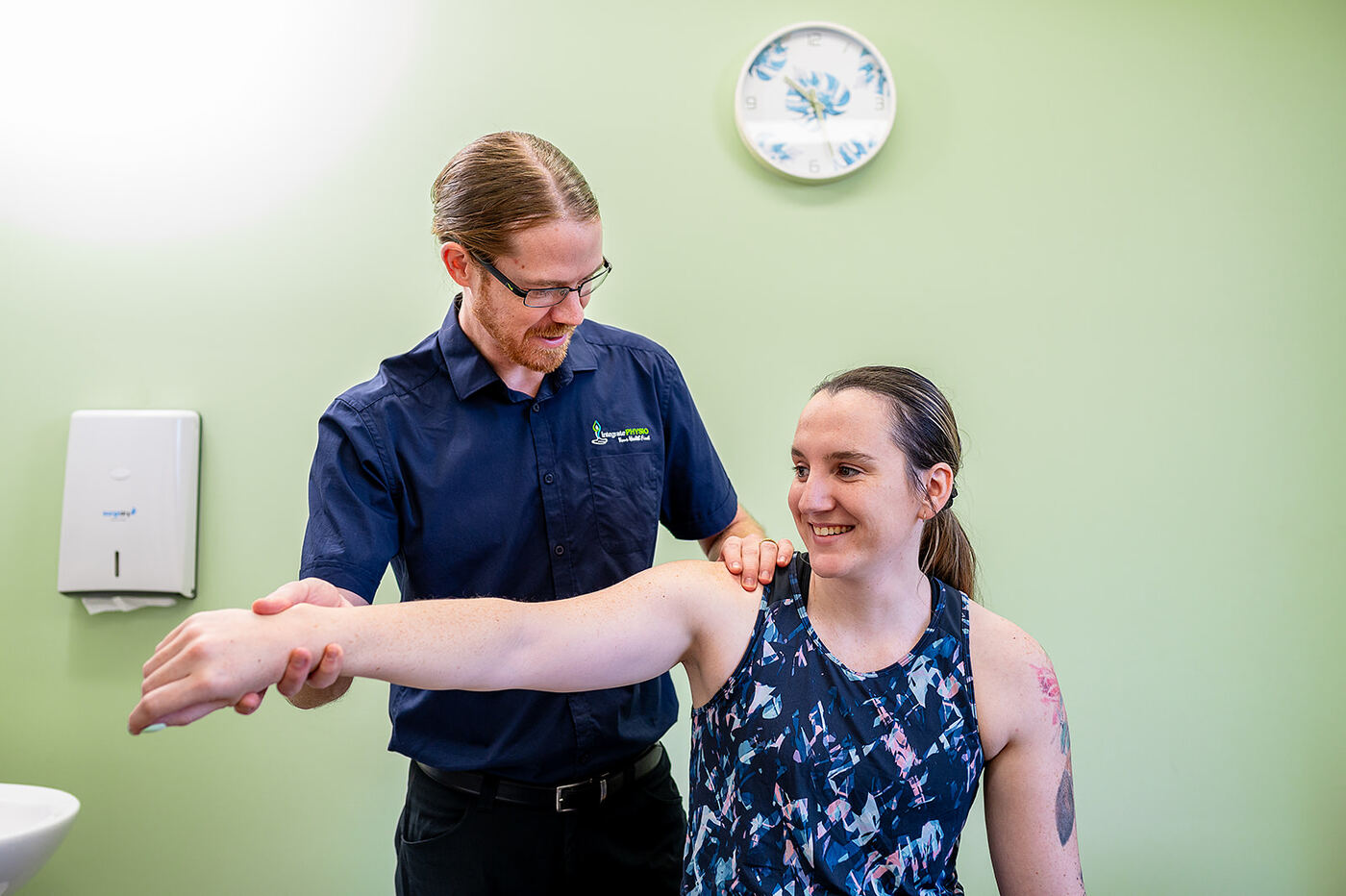
What is bursitis?
A bursa is a small fluid-filled sac that reduces friction where tendons and muscles move over bone. Bursitis happens when a bursa becomes irritated and painful. It is often linked to a nearby tendon problem, repeated pressure, or a change in activity.
Where it happens
- Hip: pain on the outside of the hip, often worse lying on that side or climbing stairs (often part of gluteal tendinopathy)
- Shoulder: pain when lifting the arm, often with rotator cuff irritation
- Knee: swelling at the front of the knee from kneeling
- Elbow: a swollen, tender point of the elbow from leaning or a knock
How physiotherapy helps
We work out what is irritating the area and reduce it, for example changing sleeping positions, kneeling habits or training load. Treatment then focuses on strengthening the surrounding muscles and tendons so the problem is less likely to return. If an injection or imaging may help, we will discuss this with you and your GP.
When to see a doctor promptly
See your GP urgently if a swollen bursa is hot, red and you feel unwell, as this can indicate infection.
See hip and knee pain, shoulder pain and tendinopathy, or book an appointment.
Common questions
Is bursitis the same as tendinopathy?
They are different structures but often occur together, especially at the hip and shoulder, so we usually treat both.
Should I stretch my hip if I have hip bursitis?
Some stretches compress the painful area and make it worse. We will show you which positions and exercises to use.
Will I need an injection?
Many people improve with physiotherapy alone. If pain is not settling, we can discuss options with your GP.
Information on this page is general and does not replace individual medical or physiotherapy advice. Your clinician will explain the most appropriate options after assessing you.