
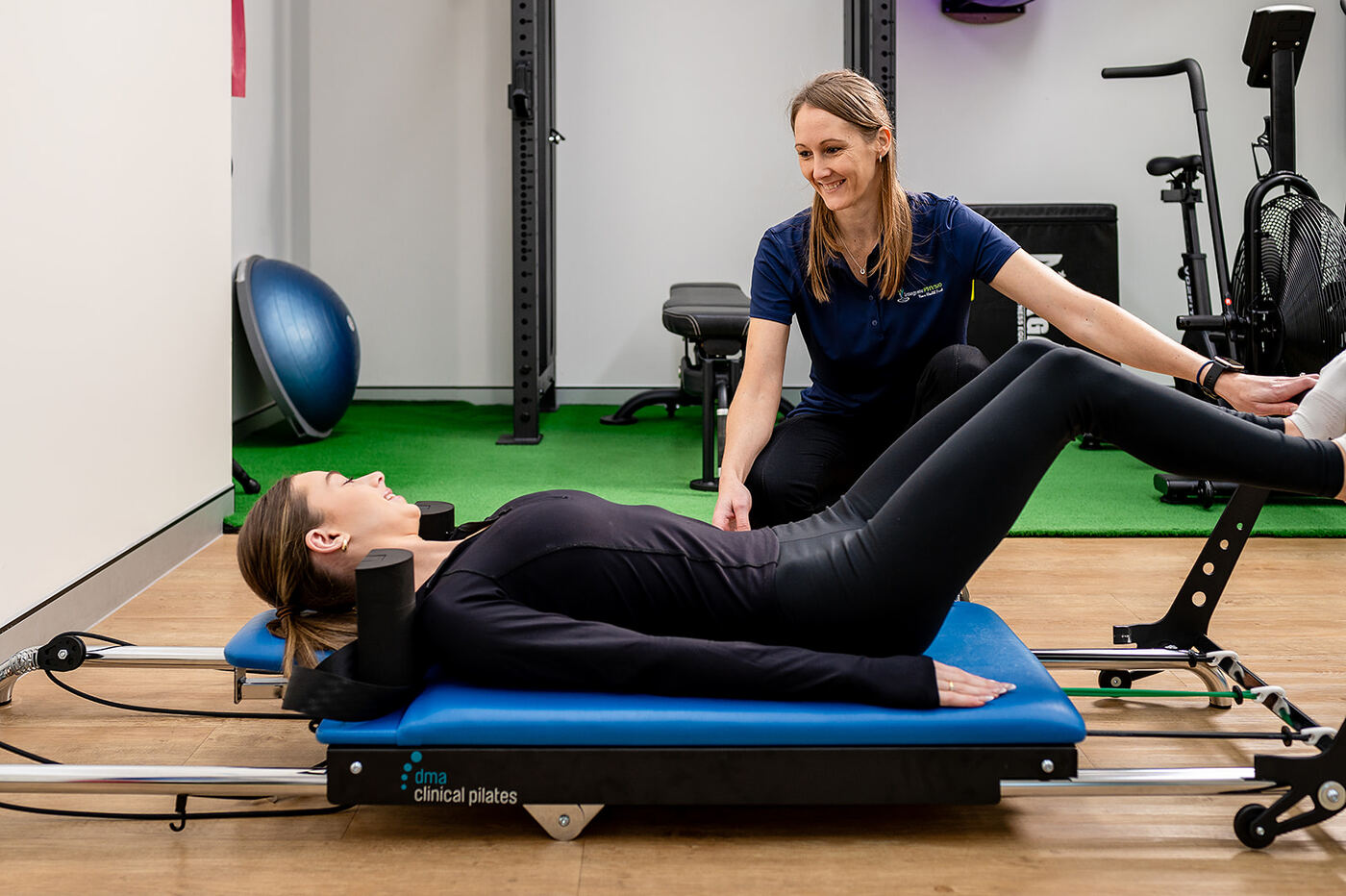
Pilates with a clinical eye
Clinical Pilates uses the principles of Pilates (control, alignment, breathing and core strength) as part of a rehabilitation or strengthening program. Unlike a general fitness class, your exercises are chosen and progressed by a physiotherapist or exercise physiologist based on an assessment of your body, your injury history and your goals.
Who is it for?
- People with back or neck pain who want to move with more confidence
- People recovering from injury or surgery
- Women during and after pregnancy, once cleared by their physiotherapist
- Dancers and athletes wanting better control and injury prevention
- Anyone wanting to improve posture, balance, flexibility and strength
How it works
Everyone starts with an assessment, so we understand how you move and what you need. Your program then uses matwork and equipment such as the reformer, adjusted to your level. Exercises are progressed as you get stronger, and many can be continued at home.
Our Pilates-trained team
Several of our clinicians have completed Pilates training, including Leigh Heinzelmann (APPI Matwork Levels 1–3), Nick Quain, Nicci Visser (APPI Clinical Pilates), Melita Marschke and Exercise Physiologist Anh Dinh (Matwork and Reformer Pilates). Ask our reception team which clinician best suits your needs.
Rebates
No referral is needed. When Clinical Pilates is part of your physiotherapy or exercise physiology care, private health rebates may apply depending on your fund and level of cover. Check with your fund or ask our team.
Clinical Pilates is often part of our Better Back program and pregnancy and postnatal care. Book an assessment to get started.
Common questions
Is Clinical Pilates the same as a gym Pilates class?
No. Clinical Pilates starts with an assessment, and your exercises are chosen and progressed by a physiotherapist or exercise physiologist for your body, injury history and goals.
I have never done Pilates. Can I still start?
Yes. Most people start as beginners. Your program is adjusted to your level and progressed as you get stronger.
What should I wear?
Comfortable clothing you can move in, such as leggings or shorts and a fitted top. Grip socks are useful for reformer work.
Information on this page is general and does not replace individual medical or physiotherapy advice. Your clinician will explain the most appropriate options after assessing you.