
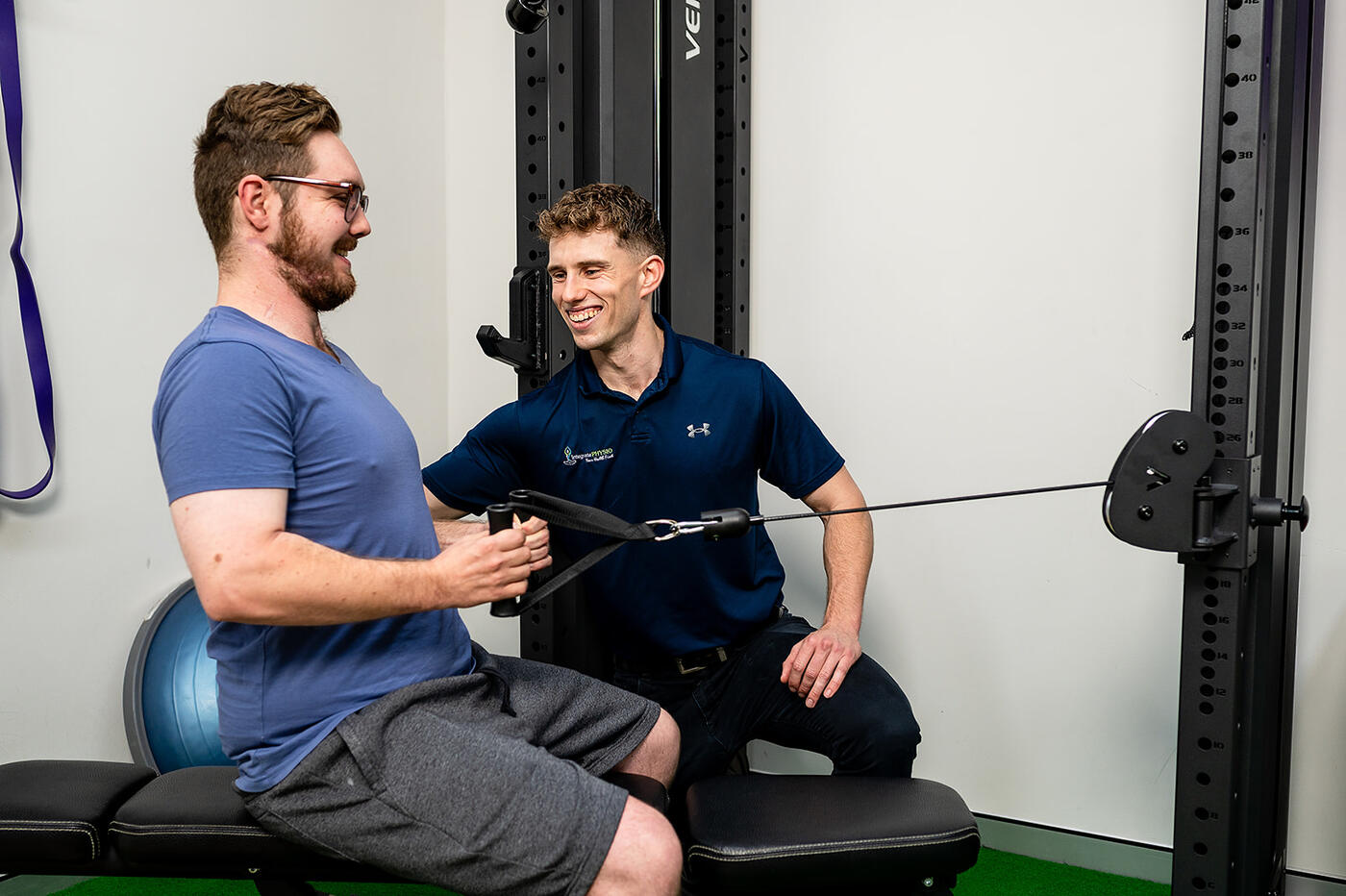
Exercise that is built around you
Exercise is one of the most effective treatments for a wide range of health conditions, but knowing what to do, how much, and how to progress safely is not always easy. Our Accredited Exercise Physiologists (AEPs) are university-trained allied health professionals who design and supervise exercise programs to help you recover from injury, manage a health condition and get stronger for the long term.
At IntegratePHYSIO, our exercise physiologists work closely with our physiotherapists. Your physio may treat the injury and then hand over to an exercise physiologist to build your strength, fitness and confidence, so your care continues without gaps.
Who can exercise physiology help?
- People finishing physiotherapy who want to keep building strength and avoid the injury coming back
- People with chronic conditions such as type 2 diabetes, heart disease, osteoarthritis, osteoporosis and persistent pain
- People recovering from surgery, such as a joint replacement or ACL reconstruction
- People with neurological conditions, including spinal cord injury
- NDIS participants working towards functional goals
- Workers returning to work after an injury
- Anyone who wants to start exercising safely after a long break
What to expect
Your first session includes a detailed conversation about your health, goals and history, followed by testing of your strength, movement, balance and fitness. From there, your exercise physiologist builds a program that suits your body, your schedule and the equipment you have access to. Sessions take place in our rehabilitation gym, and you will also get a home or gym program to keep you progressing between visits.
Meet our exercise physiologists
Chris Robinson, Senior Exercise Physiologist, focuses on sports injury rehabilitation and helping clients build sustainable strength. Anh Dinh, Exercise Physiologist, has a strong interest in neurological conditions and in supporting women before and after pregnancy, and is trained in Matwork and Reformer Pilates.
Funding and rebates
No referral is needed to see an exercise physiologist. Many private health funds offer rebates, which we can process on the spot through HICAPS. If you have a chronic condition, ask your GP whether you are eligible for a Medicare care plan, which can cover part of the cost of a number of sessions. We also see NDIS participants, DVA clients and WorkCover clients.
Not sure whether you need a referral? Read Do I need a referral to see a physio? Read more in our article What is exercise physiology?, see our programs, or book an appointment.
Common questions
What is the difference between a physiotherapist and an exercise physiologist?
Physiotherapists diagnose and treat injuries, often using hands-on treatment as well as exercise. Exercise physiologists focus on exercise as the treatment, especially for longer-term rehabilitation and chronic health conditions. At IntegratePHYSIO the two often work together on the same plan.
Do I need to be fit to see an exercise physiologist?
No. Programs start from wherever you are now, whether that is getting up from a chair more easily or returning to competitive sport.
How many sessions will I need?
It depends on your goals and condition. Many people start with weekly sessions, then move to a less frequent schedule with a home or gym program in between.
Information on this page is general and does not replace individual medical or physiotherapy advice. Your clinician will explain the most appropriate options after assessing you.