
Back on your feet
Your feet and ankles carry you through every step of the day, so pain here quickly affects work, sport and everyday life. Most foot and ankle problems respond very well to the right mix of treatment, load management and strengthening.
Conditions we commonly treat
- Ankle sprains, including repeated sprains and ankles that keep giving way
- Plantar heel pain (plantar fasciitis), often worst with the first steps in the morning
- Achilles tendinopathy, pain and stiffness at the back of the heel
- Calf strains
- Shin splints (medial tibial stress syndrome)
- Stiffness and weakness after fractures or a period in a boot
- Foot and ankle problems in dancers, including before starting pointe work
How we treat it
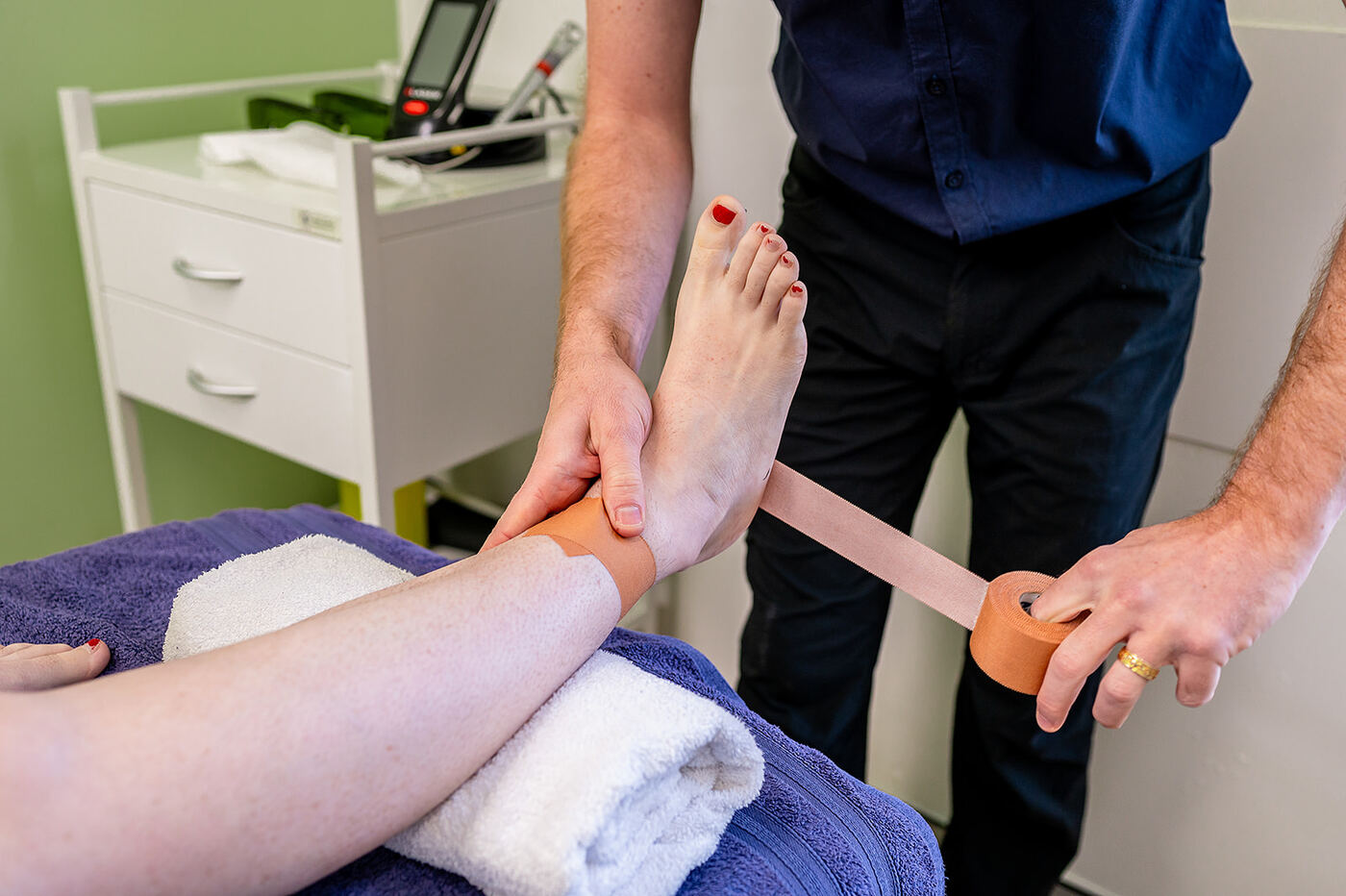
We assess your foot, ankle, footwear and the way you walk or run. Treatment may include taping, hands-on treatment, a progressive strength and balance program, and advice on footwear and training load. For stubborn heel and tendon pain, focused shockwave therapy may be an option alongside exercise.
Ankle sprains need rehab too
Ankle sprains are often brushed off, but without proper rehabilitation many people go on to have ongoing weakness and repeat sprains. A few targeted sessions focusing on balance and strength can significantly reduce that risk.
Read our article Rolled your ankle?, see our running injuries page and pre-pointe assessments, or book an appointment.
Common questions
Should I see a physio for a sprained ankle?
Yes, especially if it is badly swollen, you are struggling to walk, or it is not your first sprain. Good rehabilitation reduces the chance of it happening again.
Why is my heel worst first thing in the morning?
Pain with the first steps of the day is typical of plantar heel pain (plantar fasciitis). It usually responds well to a combination of load management, strengthening and footwear advice.
Do I need orthotics?
Not always. We look at your feet, footwear and activity, and only recommend orthotics or taping when they are likely to help.
Information on this page is general and does not replace individual medical or physiotherapy advice. Your clinician will explain the most appropriate options after assessing you.