
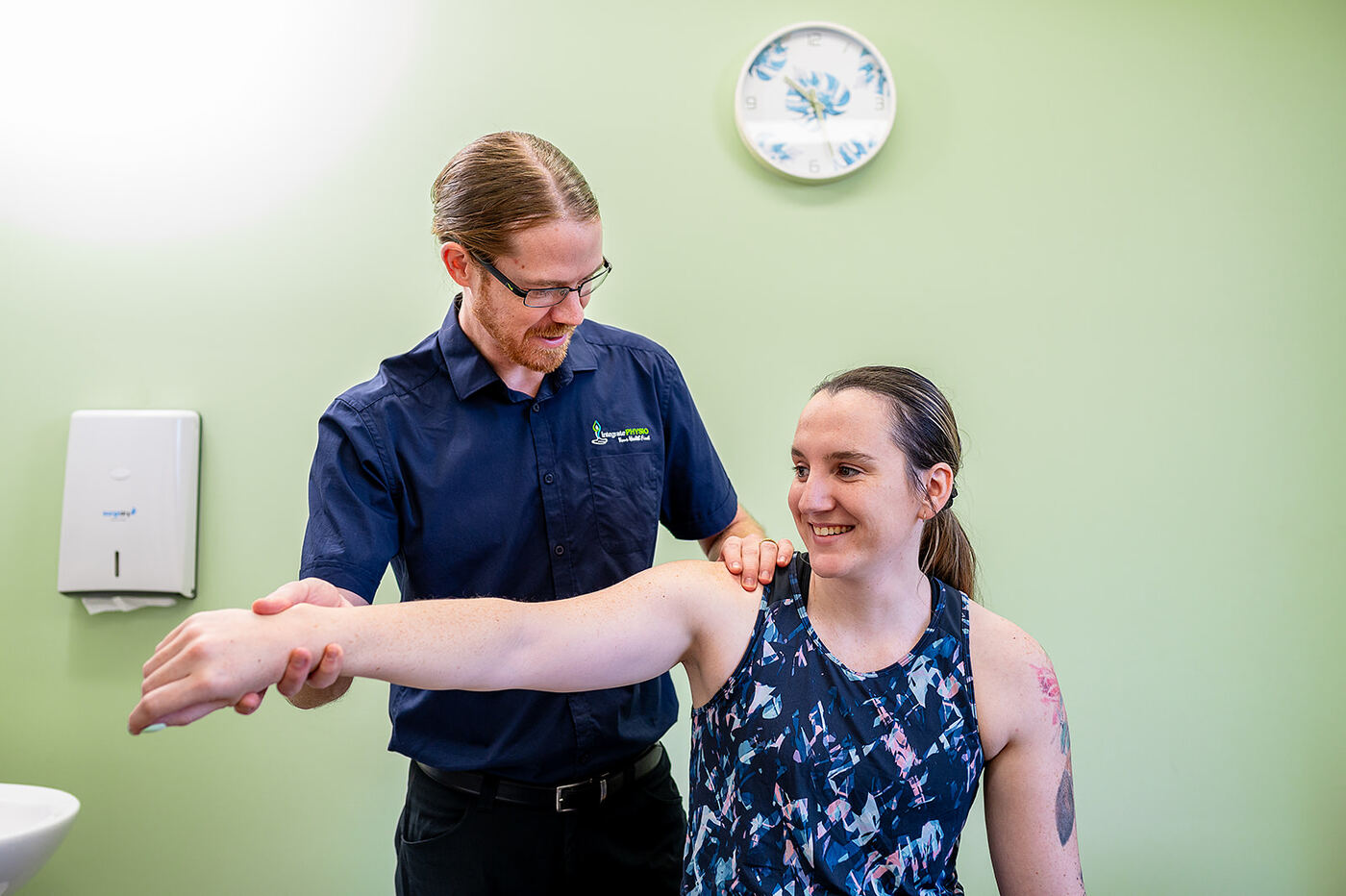
Frozen shoulder, also called adhesive capsulitis, is a painful condition where the shoulder gradually becomes stiff and difficult to move. It can be frustrating and exhausting, especially when pain disturbs your sleep. Understanding what is happening, and knowing that it does get better, is an important part of recovery.
What is frozen shoulder?
The shoulder joint is surrounded by a capsule of connective tissue. In frozen shoulder, this capsule becomes inflamed, then thickened and tight, which restricts movement in every direction. Unlike many shoulder problems, the stiffness is present even when someone else tries to move your arm for you.
Who gets it?
Frozen shoulder most commonly affects people aged 40 to 60, and is more common in women. People with diabetes or thyroid conditions are at higher risk. It can also follow a period of reduced shoulder movement, for example after an injury or surgery. Often, there is no obvious cause.
The stages of frozen shoulder
- Freezing (painful) stage: pain builds and movement starts to reduce. Night pain is common. This stage often lasts a few months.
- Frozen (stiff) stage: pain usually starts to settle, but the shoulder is very stiff.
- Thawing stage: movement gradually returns.
The whole process commonly takes one to three years, although the right treatment can ease pain and help you keep doing more along the way.
Treatment options
Treatment depends on your stage and how much pain you have:
- Physiotherapy: pain-relieving techniques, gentle movement within comfortable limits early on, and progressive stretching and strengthening as pain settles
- Education and activity advice: how to sleep, work and stay active without aggravating the shoulder
- Corticosteroid injection: can significantly reduce pain in the early, painful stage. We can discuss this with your GP.
- Hydrodilatation: an image-guided injection that stretches the joint capsule, often combined with physiotherapy afterwards
- Surgery: occasionally considered when stiffness persists despite other treatment
Pushing hard through pain in the early stage often makes things worse. A physio can guide you on how much to do and when to progress, so you get the most from each stage.
If your shoulder is painful and stiff, book an assessment with our team. Read more about shoulder pain treatment.
Information on this page is general and does not replace individual medical or physiotherapy advice. Your clinician will explain the most appropriate options after assessing you.