
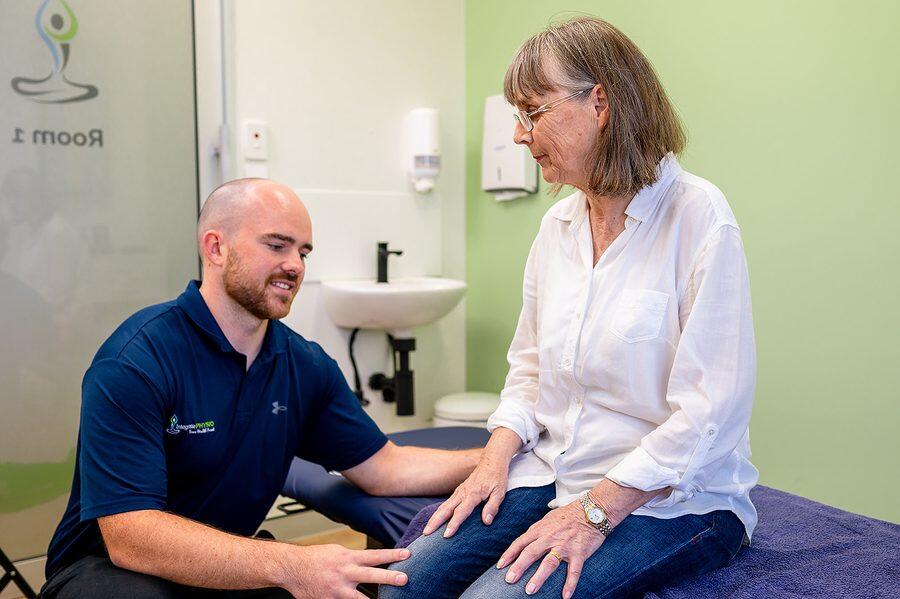
Exercise for stronger bones
Osteoporosis makes bones thinner and more likely to break, often without symptoms until a fracture happens. Exercise is one of the most important things you can do: the right type of loading helps maintain bone, builds muscle strength and improves balance, all of which lower your risk of falls and fractures.
How we help
- Assessing your strength, balance, posture and falls risk
- Progressive strength and impact training adjusted to your bone health and fitness
- Balance training to reduce the risk of falls
- Safe ways to lift, bend and stay active
- Rehabilitation after a fracture, including wrist, hip and spinal fractures
Who it is for
People with osteoporosis or osteopenia, people who have had a fracture after a minor fall, and anyone concerned about their bone health, especially after menopause. Our exercise physiologists and physiotherapists work together on your program, and Narendra Thakur has a particular interest in falls prevention for older adults.
Read our article on osteoporosis, see arthritis, or book an appointment. Medicare care plans and DVA may apply.
Common questions
Is it safe to lift weights with osteoporosis?
For most people, yes, when it is introduced and progressed carefully. Supervised strength training is recommended for bone health.
What exercise is best for bones?
A combination of progressive strength training, some impact exercise if appropriate, and balance training.
I have had a spinal fracture. Can I still exercise?
Usually yes, with modifications. We tailor your program to keep your spine safe while building strength.
Information on this page is general and does not replace individual medical or physiotherapy advice. Your clinician will explain the most appropriate options after assessing you.