
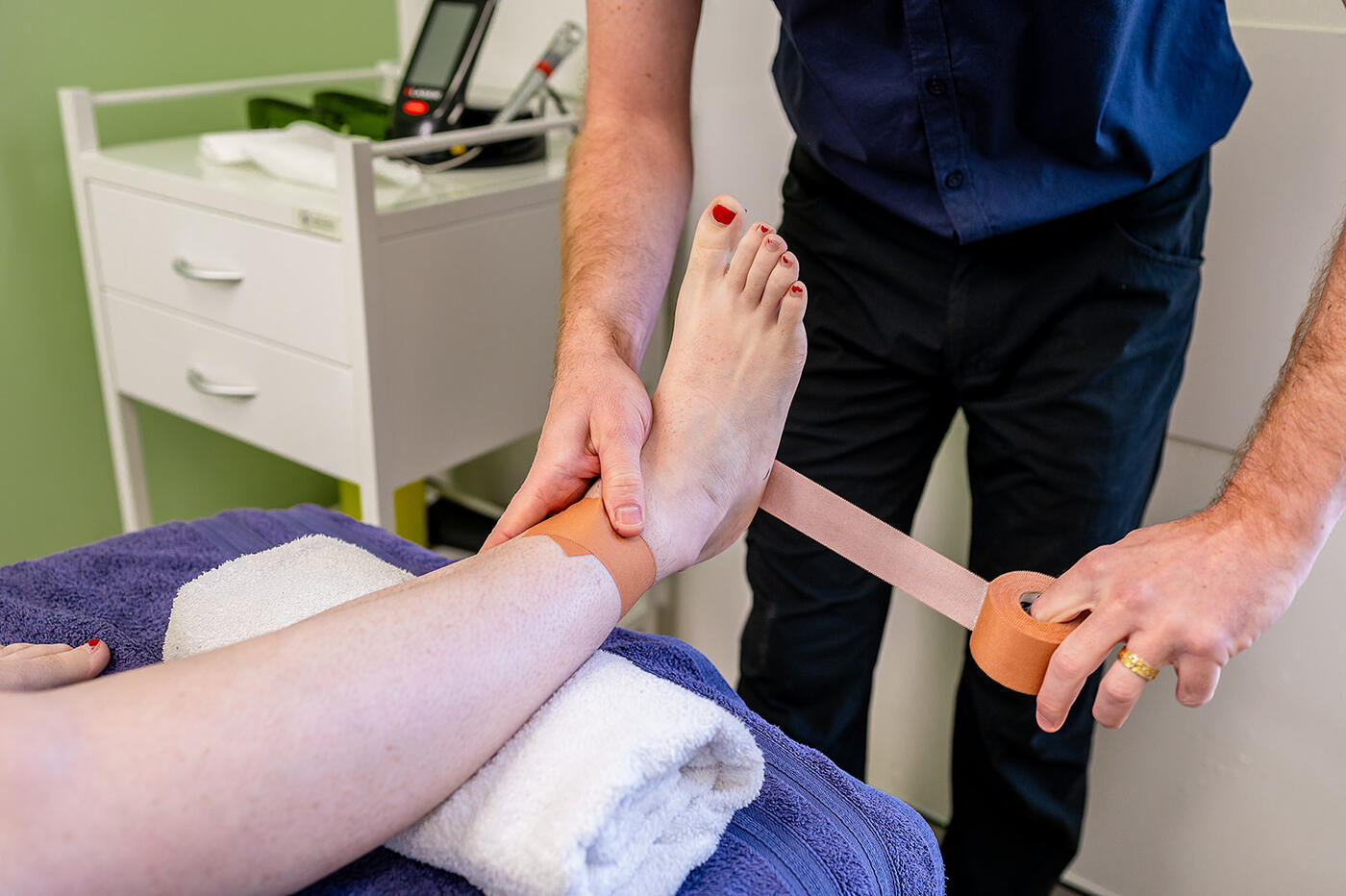
Why tendons get sore
Tendons connect muscle to bone and handle large forces every time you walk, run or lift. Tendinopathy develops when a tendon is asked to do more than it is ready for, often after a change in training, activity or work. It usually causes pain with loading, stiffness first thing in the morning or after rest, and pain that may ease as you warm up and return later.
Common types
- Achilles tendinopathy
- Patellar tendinopathy (jumper's knee)
- Gluteal tendinopathy (pain on the outside of the hip)
- Proximal hamstring tendinopathy
- Rotator cuff tendinopathy in the shoulder
- Tennis elbow (lateral elbow tendinopathy)
How we treat it
Tendons respond to the right amount of load, not complete rest. Your physiotherapist will help you adjust aggravating activities, then build a progressive strengthening program that gradually restores the tendon's capacity. For persistent cases, focused shockwave therapy may be used alongside exercise. Recovery often takes several weeks to a few months, so a clear plan matters.
Read more about jumper's knee, see running injuries and elbow pain, or book an appointment.
Common questions
Should I rest a sore tendon?
Complete rest usually makes tendons weaker. We help you reduce the aggravating load while keeping the tendon working.
Is a cortisone injection a good idea?
Injections can reduce pain in the short term but may weaken some tendons. Exercise-based rehabilitation is the first-line treatment; discuss injections with your GP if pain persists.
How long does tendinopathy take to get better?
Often 6 to 12 weeks or longer, depending on how long you have had it and the tendon involved.
Information on this page is general and does not replace individual medical or physiotherapy advice. Your clinician will explain the most appropriate options after assessing you.